
Physical security.
DDG starts with risk, not products. We evaluate facilities, infrastructure, and protective systems, then help the district decide what measures are actually justified.
How DDG helps.
Every engagement is independent and vendor-neutral. DDG evaluates risk first, then helps the district determine what measures are justified, what should be prioritized, and how implementation should be carried out.
- Assess the risk
- Determine what is actually needed
- Establish priorities
- Evaluate the right measures
- Oversee implementation
- Validate the result
Comprehensive physical security assessments
Evaluate facilities, parks, plants, infrastructure, and public assets to identify vulnerabilities, gaps, and priorities.
Surveillance, access & intrusion strategy
Evaluate coverage, access, detection, and system performance to determine whether existing protections address the district's actual risks.
Perimeter & vehicle security
Assess ingress points, gates, barriers, vehicle access, ALPR, and other perimeter controls as part of a layered security strategy.
Security lighting & facility hardening
Identify practical measures that improve visibility, deter unwanted activity, control access, and strengthen vulnerable locations.
Critical infrastructure protection
Protect water plants, lift stations, utilities, and other assets essential to district operations and community resilience.
Technology & vendor oversight
Develop requirements, evaluate proposed solutions and vendors, and oversee implementation to ensure the district gets what it intended to buy.
Where to
start.
If the answer to any of these is "we're not sure," that's the place to begin.
- 01
Do our cameras cover what matters most, and does anyone review the footage?
- 02
Who has codes or keys to our facilities, and when were they last changed?
- 03
Do we know where someone could enter a facility or critical site without being detected or delayed?
- 04
Are technology purchases based on an independent assessment or a vendor's pitch?
What we've
actually found.
In one Texas water district engagement, DDG uncovered physical security gaps that had gone unnoticed, including vulnerabilities that created a direct path into critical control systems.
Read the case studyAccess & perimeter gaps
- Generic / shared master codes
- Structural perimeter barrier gaps
- Unsecured ingress points
From assessment through implementation and ongoing oversight, DDG remains accountable to one interest: the district's.
- 01AssessIdentify vulnerabilities, risks, gaps, and available resources.
- 02StrategizePrioritize findings and develop a practical, defensible plan.
- 03ImplementCoordinate the right resources and drive the plan forward.
- 04ValidateMeasure results, identify needed adjustments, and remain accountable to the Board.
Take it
to the board.
Download and circulate before your next board meeting.
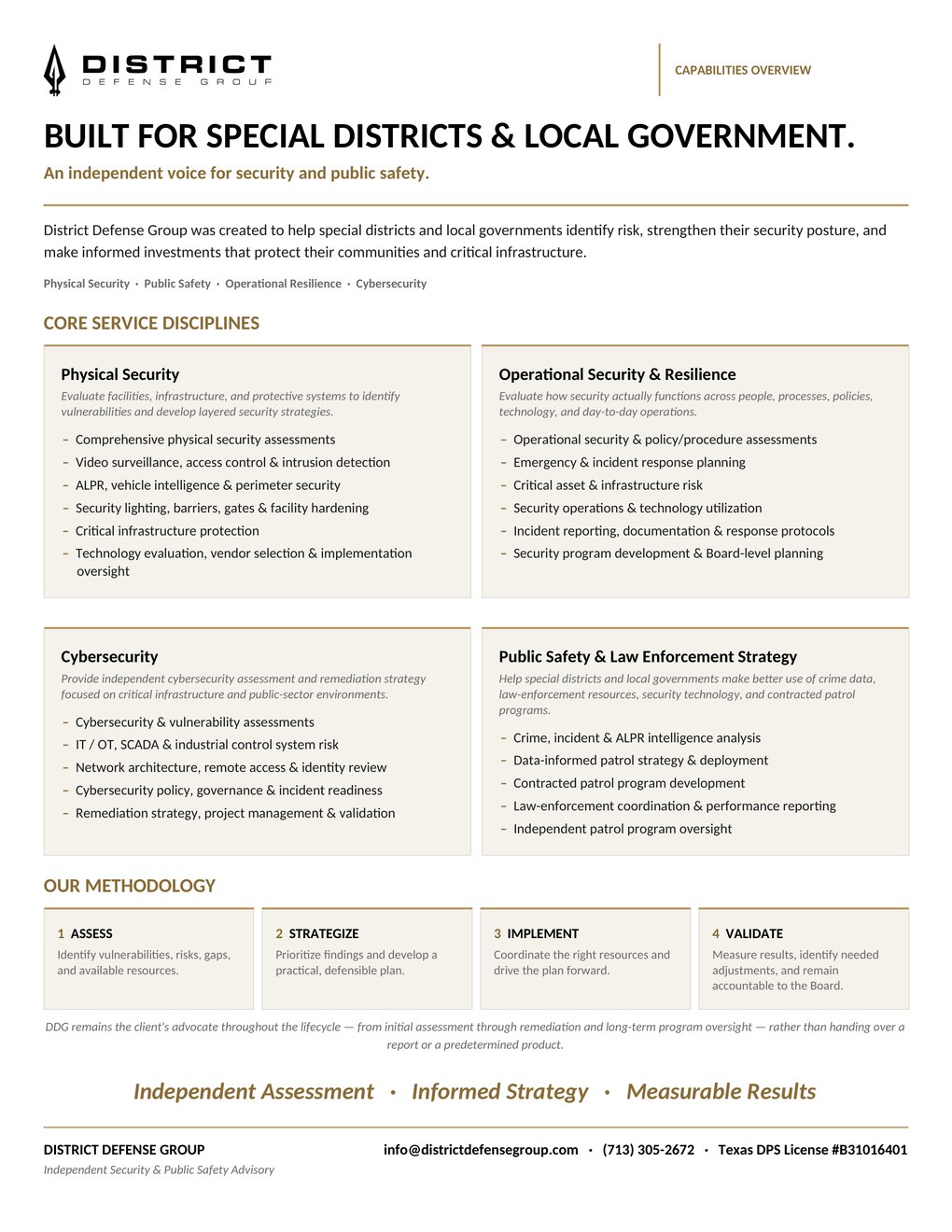 Capabilities
DDG Capabilities Overview
Independent security and public safety advisory for special districts and local government.
Download PDF ↓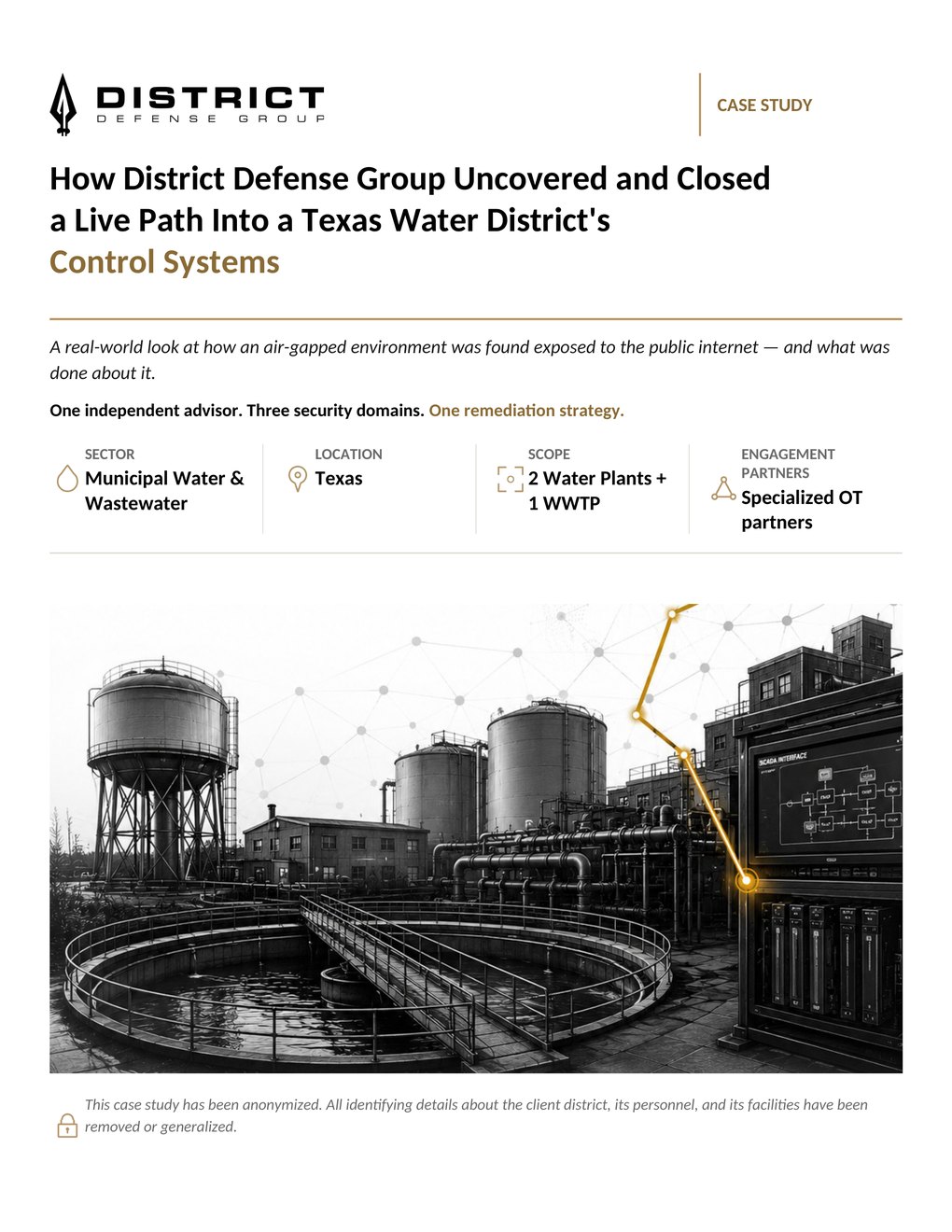 Case Study
Closing a Live Path Into Control Systems
An anonymized look at how a water district's control-system exposure was found and remediated.
Download PDF ↓One accountable
partner.
Security risks rarely stay in one category. DDG brings physical security, public safety, operational resilience, and cybersecurity into one coordinated strategy.
Start with an independent assessment.
Before the district buys cameras, gates, lighting, or access control, know what it actually needs. DDG will evaluate your facilities and critical sites and tell you what is justified, what should come first, and what isn't needed.